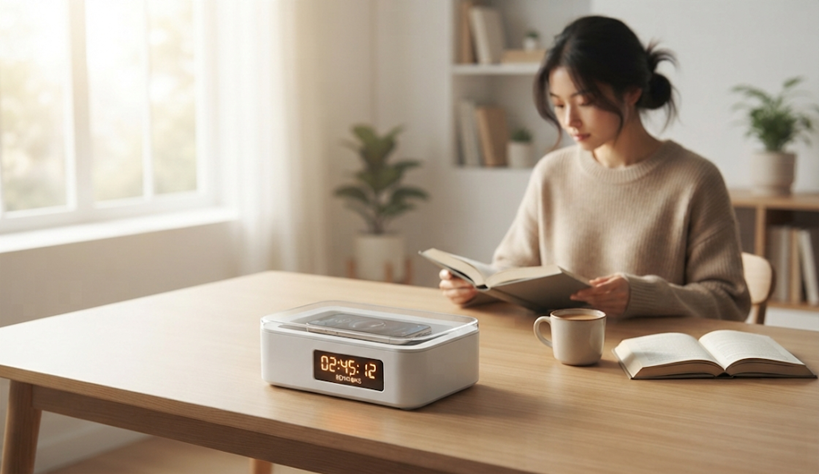
중요한 업무나 자격증 공부를 하려고 책상 앞에 앉았지만, 5분을 채 넘기지 못하고 무의식중에 휴대전화를 쥐고 숏폼을 넘겨본 경험은 누구에게나 있을 것입니다. 우리 뇌는 손가락 하나로 즉각적인 쾌락을 얻을 수 있는 기기를 눈앞에 두고서 의지력만으로 유혹을 버텨내도록 진화하지 않았습니다.
결국 자기통제력이라는 한정된 정신적 에너지를 낭비하지 않고 중독의 고리를 끊어내려면, 강제적인 물리적 장벽을 세우는 스마트폰 금욕상자를 활용한 환경 설계가 필수적입니다. 저 역시 끊임없는 알림과 도파민 갈망에 시달리며 마감일을 수차례 놓친 뒤에야 스마트폰 금욕상자를 일상에 도입했고, 놀라울 정도로 맑은 집중력을 회복할 수 있었습니다. 본 글에서는 기기의 유혹을 원천 봉쇄하는 올바른 타이머 금고 활용법과 함께, 뇌 신경계를 정상화하는 3단계 환경 통제 로드맵을 체계적으로 공유합니다.
의지력이 항상 기술에 패배하는 신경과학적 이유
많은 사람들이 스마트폰을 손에서 놓지 못할 때 자신의 ‘의지박약’을 자책하지만, 이는 뇌의 보상 예측 오류(Reward Prediction Error) 시스템에 대한 오해에서 비롯됩니다. 스마트폰 화면 속 알고리즘은 슬롯머신과 똑같은 변동 보상 체계로 설계되어 있어, 화면을 켤 때마다 뇌의 측두엽 복측 피개 영역에서 신경전달물질인 도파민이 대량 분비됩니다. 인간의 전두엽이 하루 동안 발휘할 수 있는 억제 제어력(Inhibitory Control)은 한정된 배터리와 같아서, 몇 시간만 지나면 고갈되어 충동을 억누르지 못하게 됩니다.
따라서 도파민 갈망을 이겨내는 유일하게 지속 가능한 전략은 유혹과 싸우는 것이 아니라, 유혹 자체를 감각 기관에서 완전히 격리하는 ‘외재적 통제’입니다. 세계적인 중독 및 행동신경학 연구에서도 외부 유혹 요소를 물리적으로 차단했을 때 뇌의 인지 부하가 즉각적으로 감소한다는 사실이 일관되게 증명되고 있습니다. 이와 관련된 뇌과학적 원리는 스탠퍼드 의과대학 앤드류 후버만 연구소의 도파민 조절 가이드를 통해서도 생리학적 근거를 상세히 확인할 수 있습니다.
통제 전략 구분
주요 접근 방식
뇌 인지 에너지 소모량
장기 성공 확률
내재적 통제 (의지력 중심)
화면을 보며 억지로 참기, 스크린 타임 앱 비밀번호 외우기
극심함 (전두엽 피로 누적)
10% 미만 (반동적 폭식 위험)
외재적 통제 (환경 격리)
스마트폰 금욕상자 타이머 잠금, 물리적 공간 분리
거의 없음 (인지적 평온)
85% 이상 (자연스러운 몰입)
스마트폰 금욕상자 올바른 사용법과 3단계 환경 통제 프로토콜
단순히 상자에 스마트폰을 넣고 잠그는 것만으로는 완벽한 습관 교정을 이룰 수 없으며, 점진적인 적응과 심리적 완충 장치가 병행되어야 합니다.
1단계: 울트라디안 리듬 기반의 90분 단위 마이크로 잠금
처음 스마트폰 금욕상자를 사용할 때 저지르는 가장 흔한 실수는 의욕만 앞서 6~8시간의 긴 시간을 한 번에 잠가버리는 것입니다. 뇌는 급격한 단절을 위협으로 인식하여 극심한 불안과 금단 증상을 일으키며, 결국 상자를 부수고 싶은 충동으로 이어지게 됩니다. 인간의 집중 주기에 최적화된 90분을 기본 단위로 설정하고, 90분 집중 후 10분간 상자가 열렸을 때 긴급 연락만 확인한 뒤 다시 잠그는 방식으로 뇌의 거부감을 최소화해야 합니다.
2단계: 시각적 트리거 박멸을 위한 공간적 이중 격벽 구축
투명한 아크릴 창이 달린 모델을 사용하는 경우 화면이 번쩍이는 빛이나 부재중 전화 표시가 눈에 밟혀 주의 잔류 현상이 발생합니다. 불투명한 재질의 제품을 선택하거나 상자 내부에 스마트폰을 넣기 전 전원을 끄고 화면을 바닥으로 향하게 뒤집어 놓아야 합니다. 또한 스마트폰 금욕상자 자체를 책상 위가 아닌 시야에서 완전히 벗어난 책장 구석이나 다른 방에 배치함으로써 ‘눈에서 멀어지면 마음에서도 멀어진다’는 환경 심리학적 격리를 완성합니다.
3단계: 도파민 결핍을 메우는 즉각적인 아날로그 대체 보상 연결
스마트폰이 차단되면 뇌는 급격한 지루함과 공허함을 느끼며 대체 자극을 갈구하게 됩니다. 이 결핍의 순간에 아무런 대안이 준비되어 있지 않으면 멍하니 시계만 바라보며 시간을 낭비하게 됩니다. 상자 옆에 항상 손글씨용 노트와 펜, 흥미진진한 종이책 한 권, 혹은 따뜻한 차 한 잔을 미리 준비해 두어, 손이 허전할 때 즉시 대체 행동으로 이어지도록 신경 회로를 재배선해야 합니다.
직접 겪은 실패 요인과 금욕상자 활용 시행착오
처음 스마트폰 금욕상자를 구매했을 당시에는 저 역시 뼈아픈 실패와 좌절을 겪었습니다. 충동적으로 주말 하루 전체인 12시간 연속 잠금을 설정했다가, 가족으로부터 걸려 온 중요한 연락을 확인하지 못해 큰 곤욕을 치른 적이 있었습니다. 이후 불안감이 극에 달해 상자가 열리자마자 밀린 유튜브 영상과 SNS 피드를 4시간 동안 쉬지 않고 몰아보는 심각한 ‘도파민 보상 폭식’ 현상이 나타났습니다.
이 시행착오를 통해 저는 환경 통제 역시 유연한 안전장치가 필요하다는 사실을 깨달았습니다. 우선 스마트워치를 활용해 가족이나 직장 상사의 긴급 음성 통화만 손목 진동으로 수신할 수 있도록 최소한의 화이트리스트 비상망을 구축했습니다. 그 후 평일 저녁 8시부터 10시까지 딱 2시간씩만 단계적으로 금고를 잠그는 습관을 들였습니다. 비상 상황에 대한 불안감이 사라지자 비로소 뇌가 안도감을 느끼며 깊은 독서와 사색에 몰입하기 시작했고, 한 달 만에 하루 평균 화면 이용 시간이 5시간에서 1시간대로 대폭 줄어드는 놀라운 변화를 체감할 수 있었습니다.
Q1. 스마트폰 금욕상자에 넣어두었을 때 화재나 긴급 재난 상황이 발생하면 어떻게 대처하나요? 대부분의 안전 인증 금고에는 비상 상황을 대비하여 생애 총 3~5회에 한해 즉시 잠금을 해제할 수 있는 ‘비상 강제 개방 비상 코드’가 탑재되어 있습니다. 또한 케이블 충전 구멍이 뚫려 있는 모델의 경우 해당 틈으로 최소한의 유선 통화 연결이 가능하므로 비상 통신망을 사전에 확인해 두는 것이 좋습니다.
Q2. 플라스틱 재질의 저가형 상자를 사용하다가 충동을 참지 못해 파손하는 일은 없나요? 초기 적응기에 심리적 저항이 심할 경우 얇은 플라스틱 상자를 물리력으로 깨뜨리는 사례가 실제로 드물지 않게 발생합니다. 따라서 내구성이 검증된 강화 ABS 플라스틱 또는 금속 재질의 단단한 제품을 선택하고, 앞서 설명한 것처럼 처음에는 30분~60분 단위의 짧은 시간부터 서서히 뇌를 적응시키는 훈련이 중요합니다.
Q3. 수험생이나 취준생의 경우 하루 몇 시간 정도 잠가두는 것이 가장 효율적인가요? 하루 종일 통째로 잠그는 것은 반동을 유발하므로, 오전 9시12시(3시간), 오후 2시6시(4시간)처럼 실제 집중 학습 블록에 맞추어 분할 잠금하는 방식을 추천합니다. 식사 시간이나 가벼운 휴식 시간에는 상자를 열어 가족과 소통하거나 가벼운 연락을 처리하도록 숨통을 틔워주어야 장기 레이스를 완주할 수 있습니다.
ripple point
의지력으로 유혹을 버티려는 태도는 파도가 몰아치는 해변에 모래성을 쌓고 버티는 것과 다르지 않습니다. 오늘 당장 책상 위에서 끊임없이 뇌를 자극하던 기기를 스마트폰 금욕상자 속에 넣고 단 60분의 타이머를 작동시켜 보시기 바랍니다. 화면의 불빛이 완전히 차단되는 그 순간, 여러분의 뇌는 비로소 소음에서 벗어나 진정한 창의성과 깊은 몰입의 고요를 선물받게 될 것입니다.
English Translation
Smartphone Timed Lockbox Guide: 3-Stage Environmental Control Protocol to Break Dopamine Addiction
Sitting down at a desk to handle demanding tasks often leads to reflexively picking up a smartphone within five minutes to browse endless short-form feeds. Human biology did not evolve to resist immediate high-reward digital stimuli through sheer willpower alone while the temptation remains within arm’s reach. To stop draining finite self-regulatory energy and effectively break compulsive feedback loops, establishing an uncompromising physical barrier through a smartphone timed lockbox becomes an indispensable strategy. Having endured severe attention fragmentation and missed deadlines due to constant notification loops, integrating a timed container fundamentally restored clarity and productive flow. This article provides an actionable methodology for utilizing timed locking mechanisms alongside a three-phase environmental control protocol designed to reset the neurobiological baseline.
[AI IMAGE PROMPT #1]
Alt Text: A person quietly studying next to a locked smartphone timed container on a wooden desk
Prompt (EN): A modern minimalist timed phone lockbox on a clean wooden desk with glowing digital timer numbers, a person in the background quietly reading an open book under soft morning sunlight, calm and productive atmosphere, Clean composition, lower 20% negative space for text overlay, photorealistic, 8k, aspect ratio 16:13.5
The Neuroscience of Why Willpower Fails Against Technology
Attributing chronic digital hyper-connectivity solely to a lack of discipline overlooks the precise mechanics of the brain’s reward prediction error system. Mobile operating platforms and algorithmic interfaces mirror the variable ratio reinforcement models found in commercial gambling systems, triggering massive dopamine surges in the ventral tegmental area with every screen activation. The prefrontal cortex possesses a finite reserve of inhibitory control that depletes rapidly throughout the workday, leaving individuals vulnerable to behavioral relapse.
Sustainable mitigation requires external environmental architecture rather than ongoing internal resistance. Systematic behavioral studies consistently affirm that physically separating stimuli from sensory perception instantly lowers cognitive load and mitigates attention residue. Comprehensive physiological research on this dynamic is documented by the Stanford Medicine Huberman Lab Dopamine Management Resources, outlining neural circuit recalibration in clear clinical detail.
Control Strategy
Core Approach
Cognitive Fatigue
Long-Term Efficacy
Internal Control (Willpower)
Forcing self-restraint while device is visible
Severe (Rapid prefrontal depletion)
Under 10% (High risk of binge rebound)
External Control (Physical Quarantine)
Locking device in a smartphone timed lockbox
Minimal (Cognitive calm preserved)
Above 85% (Natural, uninterrupted deep work)
Practical Protocol: 3 Stages of Environmental Control with a Lockbox
Placing a device inside a container without systemic pacing can provoke acute resistance; intentional scheduling and compensatory routines are essential for success.
Stage 1: 90-Minute Micro-Lock Intervals Based on Ultradian Rhythms
The most common mistake when adopting a smartphone timed lockbox is attempting an aggressive 6-to-8-hour continuous lockout on day one. Sudden, radical deprivation triggers threat detection in the amygdala, generating severe withdrawal agitation that often leads to abandoning the device altogether. Aligning the timer with natural 90-minute ultradian focus cycles allows individuals to inspect urgent communications during 10-minute intervals before locking the container again, easing neurological friction.
Stage 2: Dual Sensory Quarantine to Eradicate Visual Cues
Transparent containers permit flashing screen banners and LED indicators to catch the peripheral visual field, generating persistent cognitive interference. Selecting an opaque enclosure or powering down the smartphone and placing it face-down inside the vault eliminates visual anticipation. Positioning the lockbox across the room or inside a cabinet further reinforces the spatial boundary, ensuring the device remains entirely out of sight and out of mind.
Stage 3: Immediate Analog Substitutions for Neurochemical Voids
Once digital stimulation ceases, the brain experiences an uncomfortable drop below baseline dopamine levels, prompting restless searching behaviors. Lacking a pre-planned analog alternative during this transition results in aimless procrastination and distress. Keeping a physical notebook, a fountain pen, an engaging print book, or a warm beverage adjacent to the workspace establishes a reliable circuit for constructive replacement behaviors.
[AI IMAGE PROMPT #2]
Alt Text: An opaque timed lockbox sitting quietly next to an open notebook and fountain pen
Prompt (EN): Overhead still life shot of an opaque minimalist timed lockbox securely closed on an organized wooden desk, an open notebook with handwritten notes and a premium pen resting next to it, serene afternoon ambient lighting, Clean composition, lower 20% negative space for text overlay, photorealistic, 8k, aspect ratio 16:13.5
Trial, Error, and Calibrating the Safety Net
Early experimentation with a smartphone timed lockbox involved harsh miscalculations, including an indiscriminate 12-hour weekend lock that resulted in missed familial emergencies. The resulting panic precipitated a severe compensatory rebound, culminating in four straight hours of compulsive media consumption immediately upon box release.
This setback highlighted the necessity of structural moderation over punitive isolation. Establishing a dedicated bypass mechanism using a basic smartwatch allowed incoming emergency voice calls from pre-approved family members to filter through without displaying app notifications. Lockout periods were subsequently scaled down to dedicated two-hour evening deep-work windows. Removing crisis anxiety restored genuine cognitive equilibrium, ultimately cutting average daily screen time from five hours down to under ninety minutes within a single month.
Frequently Asked Questions (FAQ)
Q1. How should unexpected emergencies or urgent situations be managed during a lock cycle? Most certified models include emergency override protocols permitting a strictly limited lifetime allotment (typically 3 to 5 overrides) for critical contingencies. Furthermore, models equipped with narrow charging ports permit basic wired phone answering while retaining total physical lockdown of screen interaction.
Q2. Is there a realistic risk of physically damaging an inexpensive plastic lockbox during impulsive cravings? During the initial adaptation phase, acute craving spikes have driven users to crack fragile, low-grade plastic cases. Investing in high-grade impact-resistant ABS or metal alloy containers and commencing with conservative 30-to-60-minute increments effectively circumvents destructive impulse thresholds.
Q3. What is the optimal daily locking duration for students and competitive exam candidates? Full-day monolithic lockdowns frequently trigger rebound binging; partitioning sessions into distinct functional blocks (e.g., 9:00 AM–12:00 PM and 2:00 PM–6:00 PM) yields far better consistency and psychological sustainability over multi-month preparation periods.
ripple point
Relying on mental fortitude against hyper-engineered algorithms is equivalent to building sandcastles against a tidal wave. Take control today by placing your device inside a smartphone timed lockbox and initiating a focused 60-minute lock cycle. The moment the screen darkens and slips beyond reach, your mind finally sheds synthetic distractions, unlocking deep restorative calm and genuine creative flow.