본 글은 한국어로 작성되었으며, 글 하단에서 영문 번역본을 확인하실 수 있습니다.
(Scroll down to the bottom for the English version of this post.)

짤막한 대기 시간조차 견디지 못하고 스마트폰을 켜는 미디어 중독으로 인해 진정한 뇌 휴식을 얻지 못하고 극심한 스트레스 해소 정체를 겪는 현대인이 급증하고 있습니다. 스마트폰 의존도가 높아질수록 뇌는 한순간도 쉬지 못하는 정보 과부하 상태에 노출되며, 이는 집중력 향상 저하와 전두엽 기능 마비라는 스마트폰 부작용을 유발합니다. 본 가이드에서는 뇌 과학적 관점에서 멍 때리기의 필수성을 분석하고, 디지털 디톡스를 통해 생각하는 힘을 복원하는 3가지 구체적인 행동 수칙을 제시합니다.
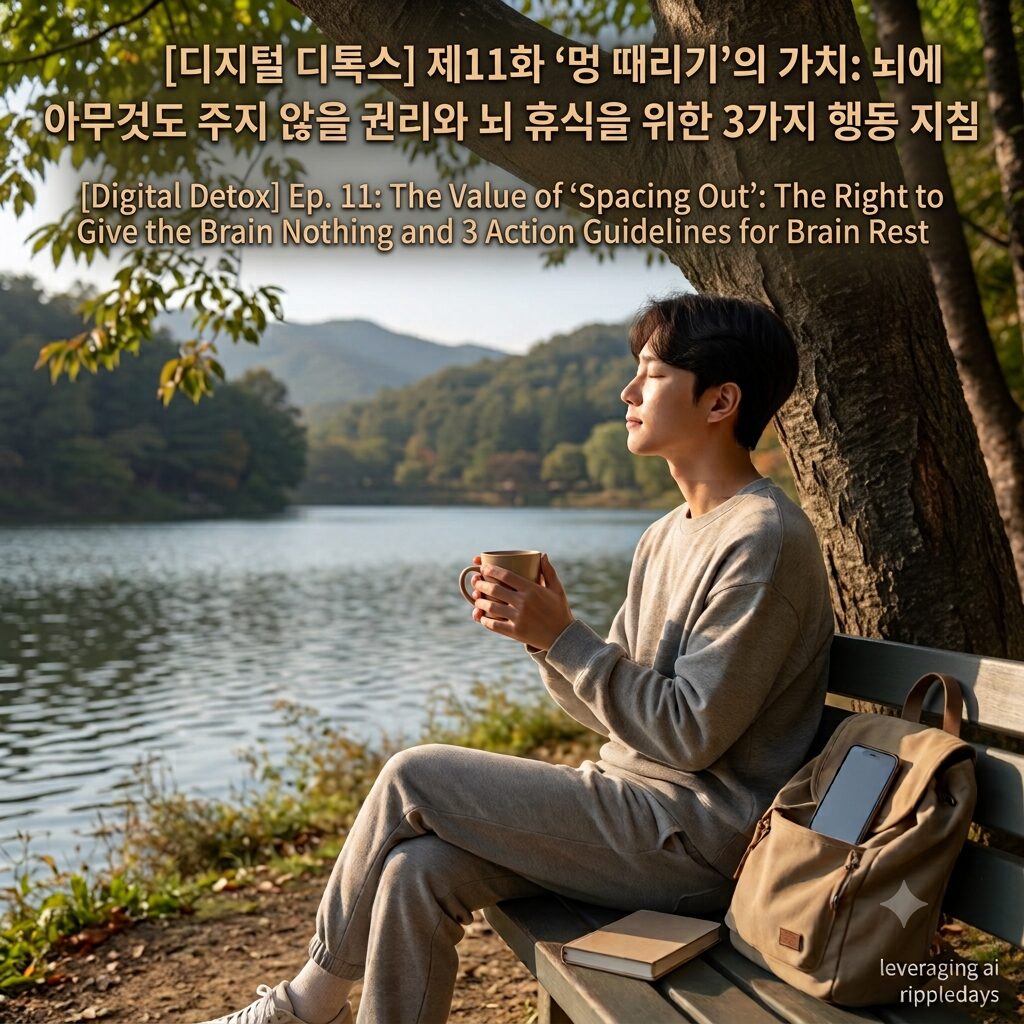
쉴 틈 없이 과열되는 현대인의 전두엽, 왜 ‘아무것도 하지 않을 권리’가 필요한가
많은 현대인이 버스를 기다릴 때, 엘리베이터를 탈 때, 혹은 화장실에 있는 짤막한 틈새 시간에도 스마트폰 중독 상태로 화면을 스크롤하곤 합니다. 이러한 습관은 뇌에 아무런 여백도 허용하지 않는 치명적인 정보 과부하를 일으키며, 스트레스 해소를 방해하고 만성적인 뇌 피로를 축하하는 주범이 됩니다. 뇌 과학 연구에 따르면 아무런 인지적 과제도 수행하지 않고 온전히 멍 때리기를 할 때, 뇌의 특정 영역인 디폴트 모드 네트워크(Default Mode Network)가 활성화됩니다. 디폴트 모드 네트워크는 단편적으로 유입된 수많은 정보를 정리하고 기억을 체계적으로 저장하며, 창의성과 생각하는 힘을 발현시키는 두뇌의 핵심 정비 시스템입니다. 하지만 스크린 타임이 끊임없이 이어지면 이 정비 시스템이 가동되지 못해 단기 기억이 장기 기억으로 전환되지 못하고 극심한 집중력 저하가 발생합니다. 스마트폰 부작용으로 무너진 뇌의 인지적 수용력을 되살리기 위해서는 디지털 웰니스 관점에서 하루 중 의도적인 공백을 만들어내는 결단이 요구됩니다. 의지만으로 자극적인 정보를 거부하기 어렵다면, 기기를 내려놓고 내 두뇌에 진정한 뇌 휴식 시간을 선물하는 구체적인 행동 양식을 정착시켜야 합니다. 지금부터 일상에서 즉시 실천할 수 있는 스마트폰 중독 해결방안이자 뇌 건강 관리를 돕는 멍 때리기 단계별 지침 3가지를 상세히 알아보겠습니다.
과부하된 뇌를 리셋하고 생각하는 힘을 기르는 행동 수칙 3가지
1단계: 이동 및 대기 시간에 ‘스마트폰 가방 깊숙이 넣고 의도적으로 먼 곳 바라보기’
지하철역에서 열차를 기다리거나 횡단보도 신호를 대기하는 짤막한 틈새 시간은 우리 뇌가 잠시 숨을 고를 수 있는 최고의 아날로그 청정 구역입니다. 앞으로는 이러한 대기 시간이 찾아왔을 때 습관적으로 주머니에서 스마트폰을 꺼내지 말고 과감하게 가방이나 깊은 주머니에 기기를 봉인하십시오. 대신 고개를 들어 먼 곳의 풍경을 바라보거나 하늘을 올려다보며 눈과 전두엽에 가해지던 시각적 디지털 자극을 완벽히 차단해야 합니다. 이 짧은 여백의 확보는 뇌가 실시간으로 쌓인 피로를 분산시키고 디폴트 모드 네트워크를 가동하는 시발점이 되며 스크린 타임을 제어하는 강력한 기초 훈련이 됩니다.
2단계: 스마트폰 없는 청정 휴식, ‘하루 10분 창밖 보며 차 마시는 뇌 리셋 시간’ 갖기
매일 오후 뇌 피로가 극에 달하는 무기력한 시간대에 스마트폰 의존도를 낮추고 스트레스 해소를 이끌어내는 정적인 아날로그 루틴을 구축해야 합니다. 컴퓨터 모니터와 전자기기 전원을 잠시 멀리한 채 따뜻한 차 한 잔을 준비하여 창가에 앉아 10분 동안 온전히 멍하니 시간을 보내 보십시오. 스마트폰 화면 속 타인의 하이라이트 릴을 보며 뇌를 혹사시키는 대신, 찻잔에서 피어오르는 온기와 창밖의 느린 변화를 가만히 음미하는 마음챙김이 필요합니다. 아무런 데이터도 뇌에 주입하지 않는 10분의 공백은 지친 전두엽 회복을 촉진하며 전반적인 시간 관리의 효율성과 집중력 향상에 지대한 기여를 합니다.
3단계: 디지털 소음이 사라진 공간에서 ‘일주일에 한 번 자연 속 어싱 및 숲 멍 즐기기’
도시의 끊임없는 알림 스트레스와 정보의 홍수에서 벗어나 완전히 고요한 환경 속에서 두뇌의 생리적 균형을 복원하는 주말 솔루션입니다. 주말 중 하루는 스마트폰을 금욕상자에 넣어두거나 전원을 끈 채 인근의 공원이나 호젓한 숲길을 찾아 오롯이 자연의 템포를 몸으로 느껴보십시오. 벤치에 가만히 앉아 바람에 흔들리는 나뭇잎 소리를 듣거나 숲을 바라보는 숲 멍 활동은 스트레스 호르몬인 코르티솔 수치를 획기적으로 낮춰줍니다. 인공적인 타임라인 대신 자연의 타임라인을 마주하는 디지털 디톡스 방법은 도파민 역치를 정상화하여 사소한 일상에서도 행복을 느끼는 건강한 뇌를 만듭니다.
성공적인 뇌 휴식을 위한 ‘3분 체크리스트’
하루의 마무리에 아래 체크리스트를 확인하며 오늘 하루 얼마나 디지털 디톡스를 잘 실천했는지 점검해 보십시오.
- 대중교통을 기다리거나 엘리베이터를 타는 짤막한 틈새 시간에 스마트폰을 꺼내지 않고 가만히 기다렸는가?
- 하루 중 최소 10분 이상 모든 전자기기 화면을 끄고 창밖을 보거나 고요하게 멍 때리는 시간을 가졌는가?
- 무언가를 생각하거나 정리할 때 스마트폰 검색 기능에 의존하지 않고 내면의 목소리에 집중해 보았는가?
- 휴식을 취할 때 자극적인 쇼츠나 릴스 영상을 시청하는 가짜 휴식 대신 온전한 신체 이완을 실천했는가?
- 외부의 디지털 알림이나 소음이 차단된 나만의 아날로그 청정 구역을 설정하고 정서적 안정을 체감했는가?
ripple point
뇌에 아무것도 주지 않을 권리를 스스로 허락할 때, 비로소 디폴트 모드 네트워크가 가동되며 무너진 집중력과 생각하는 힘이 기적처럼 회복됩니다.
제10화 SNS를 지웠다, 그리고 찾아온 FOMO(소외 불안)를 극복하는 3가지 심리 가이드
Hashtag
#멍때리기 #뇌휴식 #스트레스해소 #디지털디톡스 #스마트폰중독 #디폴트모드네트워크 #뇌피로해소 #집중력향상 #스크린타임 #스마트폰의존도 #현대인고질병 #디지털웰니스 #미디어중독 #스마트폰중독해결방안 #전두엽회복 #시간관리 #스마트폰부작용 #마음챙김 #뇌건강관리 #생각하는힘
English Version Available Below
Ep. 11: The Value of ‘Spacing Out’: The Right to Give the Brain Nothing and 3 Action Guidelines for Brain Rest
An increasing number of modern individuals are failing to obtain genuine brain rest and are experiencing stagnation in stress relief due to media addiction, where they turn on their smartphones because they cannot tolerate even a brief waiting time. As smartphone dependency increases, the brain is exposed to a state of information overload without a single moment of rest, which triggers smartphone side effects such as a drop in concentration improvement and the paralysis of prefrontal cortex functions. In this guide, we analyze the necessity of spacing out from a brain science perspective and present three specific action rules to restore the power of thought through digital detox.
The Overheated Prefrontal Cortex of Modern People: Why the ‘Right to Do Absolutely Nothing’ Is Necessary
Many modern people scroll through screens in a state of smartphone addiction during brief gap times, such as waiting for a bus, riding an elevator, or being in the restroom. This habit causes severe information overload by allowing zero margin to the brain, serving as a primary culprit that hinders stress relief and accumulates chronic brain fatigue. According to brain science research, when one spaces out entirely without executing any cognitive tasks, a specific area of the brain known as the Default Mode Network is activated. The Default Mode Network is the brain’s core maintenance system that organizes vast amounts of fragmentarily influxed information, systematically stores memories, and manifests creativity and the power of thought. However, if screen time continues uninterrupted, this maintenance system fails to operate, preventing short-term memories from converting into long-term memories and causing a severe decline in concentration. To revive the brain’s cognitive capacity ruined by smartphone side effects, a firm decision to create intentional blank spaces from a digital wellness perspective is required. If it is difficult to reject stimulating information by willpower alone, you must lower your device and establish specific behavioral patterns that gift genuine brain rest time to your brain. Below, we will examine in detail three step-by-step guidelines for spacing out that serve as a smartphone addiction solution and assist with brain health management which can be immediately practiced in daily life.
3 Action Steps to Reset an Overloaded Brain and Cultivate the Power of Thought
Step 1: During Moving and Waiting Times, ‘Put the Smartphone Deep in Your Bag and Intentionally Gaze Afar’
Brief gap times, such as waiting for a train at a subway station or waiting for a pedestrian signal at a crosswalk, are the finest analog clean zones where our brains can catch their breath for a moment. From now on, when such a waiting time arrives, do not habitually pull your smartphone out of your pocket; boldly seal the device inside a bag or a deep pocket instead. Instead, raise your head to gaze at distant scenery or look up at the sky to completely block the visual digital stimuli that were being applied to your eyes and prefrontal cortex. Securing this brief blank space serves as a starting point for the brain to disperse accumulated fatigue in real time and operate the Default Mode Network, and functions as powerful baseline training to control screen time.
Step 2: Clean Relaxation Without Smartphones, Have ’10 Minutes of Brain Reset Time Drinking Tea While Looking Out the Window’ Every Day
Every afternoon, during lethargic timeframes when brain fatigue reaches its peak, you must build a static analog routine that lowers smartphone dependency and drives stress relief. Keep away from computer monitors and electronic device power supplies for a moment, prepare a warm cup of tea, sit by the window, and spend 10 minutes entirely spacing out blankly. Instead of exhausting your brain while watching others’ highlight reels on a smartphone screen, mindfulness is required to quietly savor the warmth rising from the teacup and the slow changes outside the window. This 10-minute blank space of injecting zero data into the brain promotes the recovery of an exhausted prefrontal cortex, contributing immensely to the efficiency of overall time management and concentration improvement.
Step 3: Enjoy ‘Nature Earthing and Forest Spacing Out Once a Week’ in a Space Free of Digital Noise
This is a weekend solution to escape from the continuous notification stress and flood of information in the city and restore the physiological balance of the brain within a completely tranquil environment. Utilize one day during the weekend to keep your smartphone inside a safe box or turn off its power, visit a nearby park or a quiet forest path, and feel the tempo of nature entirely with your body. Sitting quietly on a bench to listen to the sound of leaves shaking in the wind or engaging in forest spacing out activities drastically lowers cortisol levels, which are stress hormones. This digital detox method facing the timeline of nature instead of an artificial timeline normalizes the dopamine threshold, creating a healthy brain that feels happiness even in simple daily life.
A 3-Minute Checklist for Successful Brain Rest
At the end of the day, review the checklist below to check how well you have practiced digital detox today.
- Did you wait quietly without pulling out your smartphone during brief gap times like waiting for public transit or riding an elevator?
- Did you have time to turn off all electronic device screens and space out blankly while looking out the window for at least 10 minutes a day?
- When thinking about or organizing something, did you focus on your inner voice instead of relying on the smartphone search feature?
- When taking a rest, did you practice complete physical relaxation instead of fake relaxation like watching stimulating Shorts or Reels videos?
- Did you configure your own analog clean zone where external digital notifications or noises were blocked and experience emotional stability?
ripple point
When you grant your brain the right to receive absolutely nothing, the Default Mode Network finally operates, miraculously recovering ruined concentration and the power of thought.
Ep. 10: I Deleted Social Media, And Then Faced FOMO (Fear Of Missing Out): 3 Psychological Guides to Overcoming Anxiety
Hashtag
#spacingout #brainrest #stressrelief #digitaldetox #smartphoneaddiction #defaultmodenetwork #brainfatiguerelief #concentrationimprovement #screentime #smartphonedependency #modernailment #digitalwellness #mediaaddiction #smartphoneaddictionsolution #prefrontalcortexrecovery #timemanagement #smartphonesideeffects #mindfulness #brainhealthmanagement #powerofthought